
Most vehicles on the road today are built on a unibody structure — a single integrated frame and body shell engineered to distribute crash forces, protect occupants, and maintain the precise geometry that keeps every system on your car working correctly. When a collision damages that structure, the consequences go far deeper than bent metal and broken panels.
At Cavallo Auto Body, unibody repair is one of our most critical and carefully executed services. Using computerized measuring technology, dedicated straightening equipment, and manufacturer-approved repair procedures, we restore your vehicle’s unibody to the exact factory specifications it was built to — because when it comes to structural integrity, close is never good enough.
Any of these symptoms after an accident should be treated as a structural concern until proven otherwise. Don’t wait, bring your vehicle in for a full computerized assessment.
A vehicle with unrepaired unibody damage is not just uncomfortable to drive; it’s dangerous. Here’s why:
Compromised Crash Protection
Modern unibody vehicles are engineered with precisely designed crumple zones that absorb and redirect collision energy away from the occupant compartment. When those zones are already deformed from a previous impact, they cannot perform as designed in a subsequent accident. The structure that was supposed to protect you has already used up its capacity.
Misaligned Safety Systems
Airbag sensors, seatbelt pretensioners, and ADAS components are all calibrated relative to the vehicle’s structural geometry. A distorted unibody means these systems may not deploy correctly or at all when you need them most.
Accelerated Wear
Unibody distortion puts uneven stress on suspension components, tires, wheel bearings, and drivetrain parts, causing premature wear that leads to costly repairs down the road.
Getting unibody damage repaired correctly isn’t just about your car looking right. It’s about it being safe to drive.
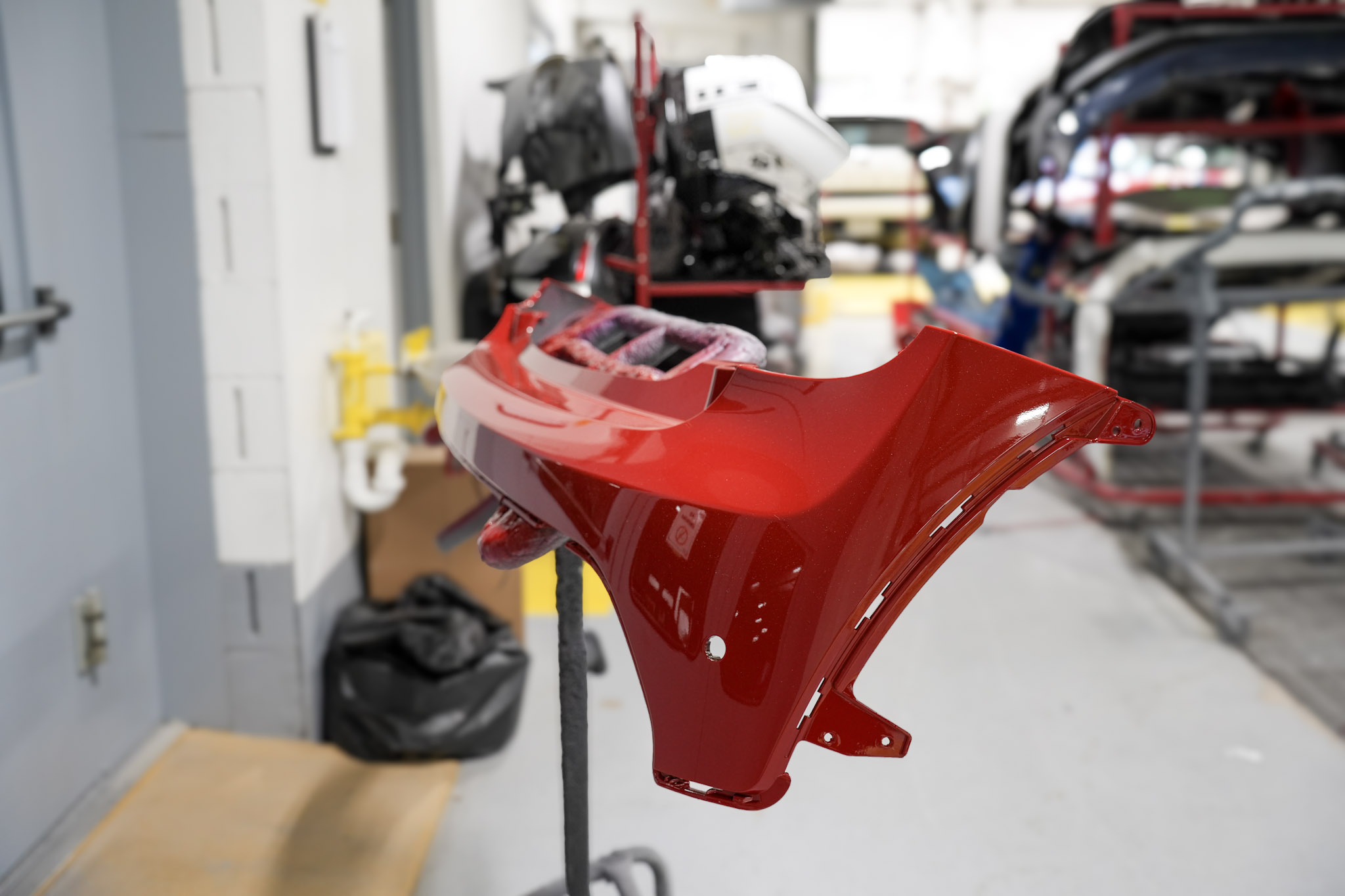
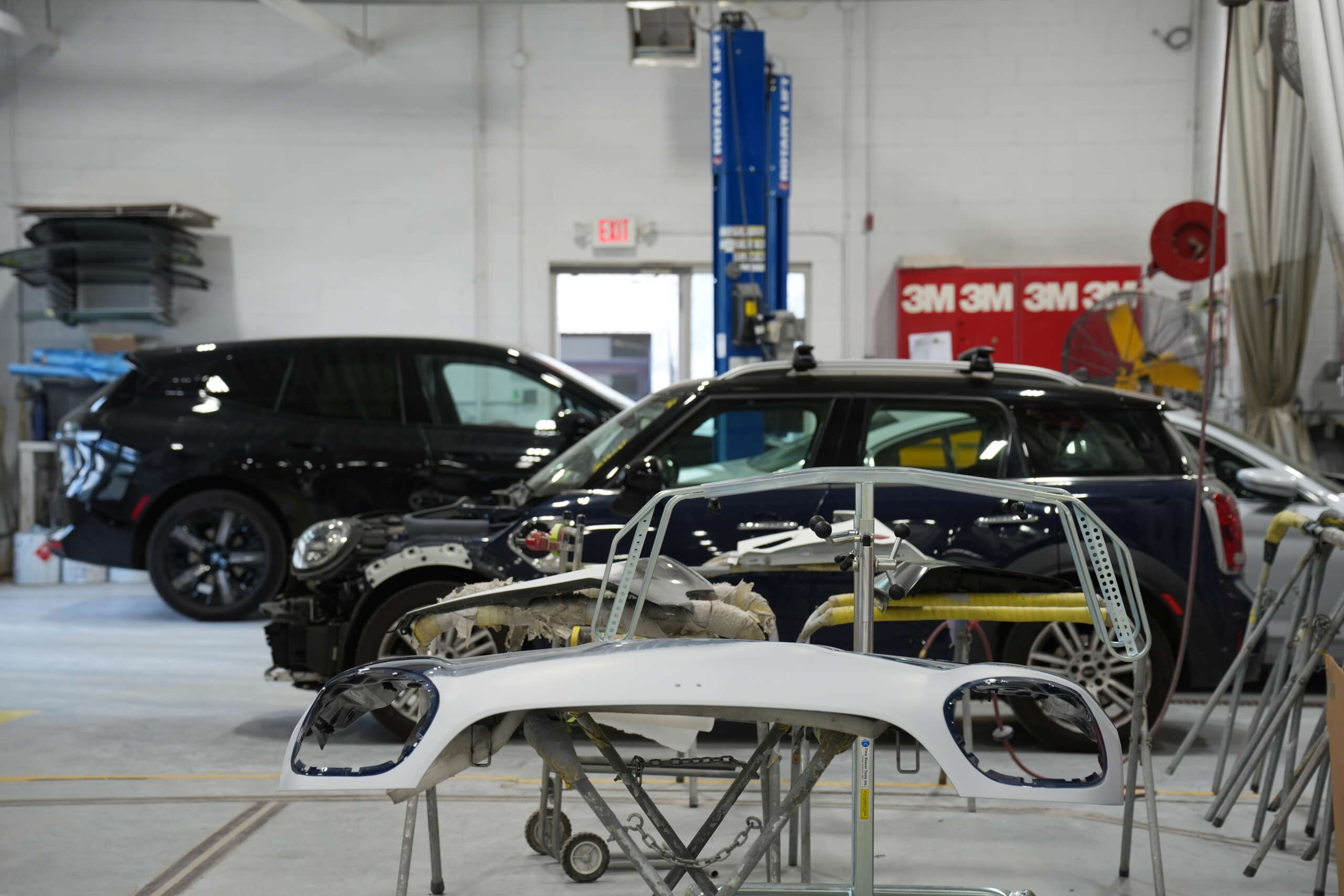
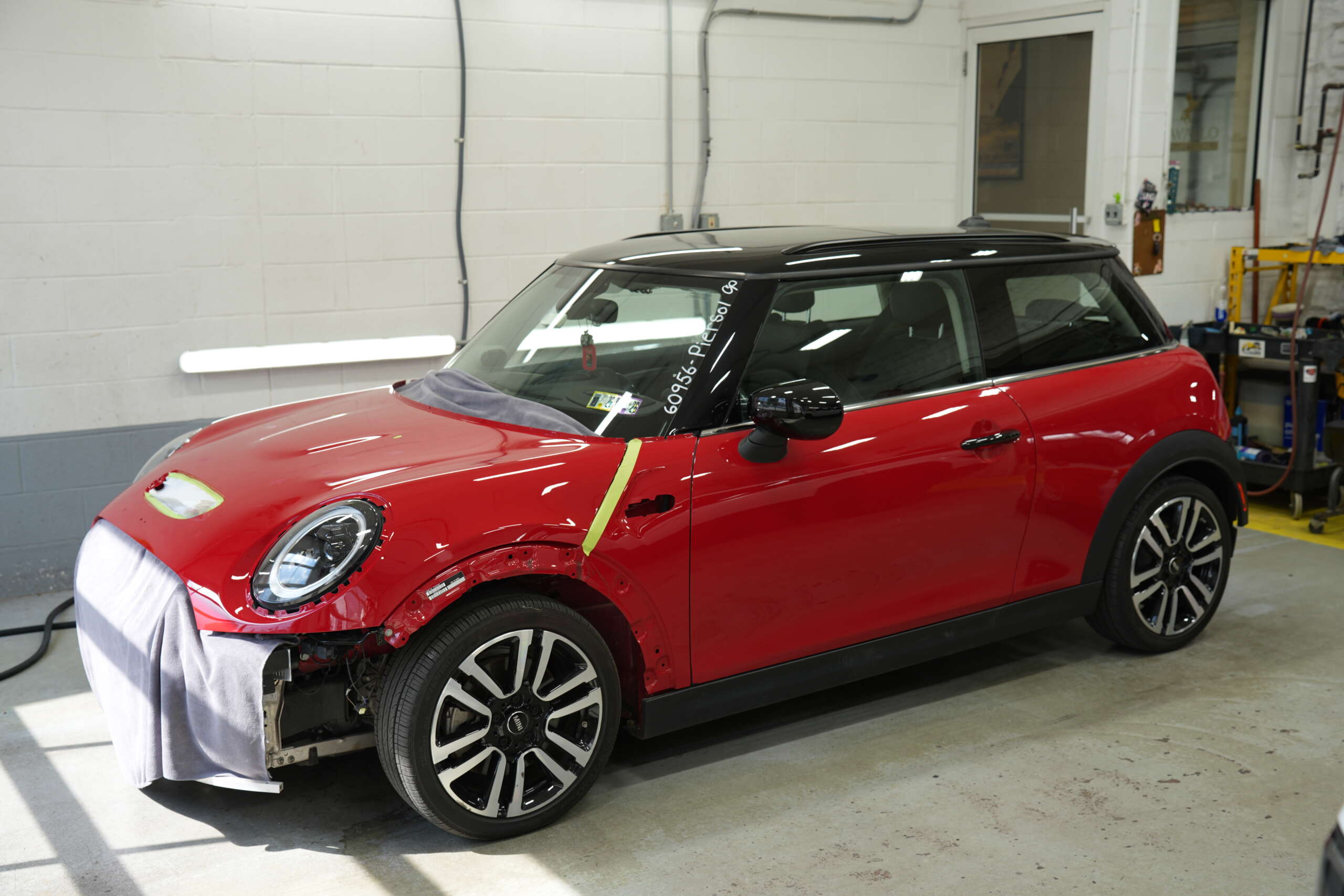

The cornerstone of proper unibody repair is precise measurement. At Cavallo Auto Body, we use a computerized measuring system that compares your vehicle’s actual structural dimensions, at dozens of critical points, against the manufacturer’s exact factory specifications.
This technology allows us to:
There is no guesswork in our unibody repair process. Every correction is measured, verified, and documented before your vehicle leaves our shop.
1. Full Structural Assessment
Before any work begins, we perform a complete computerized structural scan of your vehicle, identifying all primary damage, secondary stress points, and areas of hidden distortion that aren’t visible from the surface.
2. Insurance Documentation
Every measurement, photograph, and damage finding is compiled into a detailed report that we share directly with your insurance company. We advocate for the full scope of repairs your vehicle requires, not just what’s visible at first glance.
3. Disassembly
We remove all body panels, trim, and components necessary to fully access the damaged structural areas. Hidden damage discovered during disassembly is documented and communicated immediately.
4. Unibody Straightening
Using a dedicated frame and unibody straightening fixture, we apply precisely controlled, measured force to return distorted sections of the structure back to factory geometry, verified continuously with our computerized measuring system throughout the process.
5. Structural Repair & Reinforcement
Sections that cannot be straightened to factory specification are repaired or replaced using manufacturer-approved procedures, materials, and welding techniques to restore the vehicle’s original structural strength and crash performance.
6. Body Repair & Panel Fitting
With the structure restored, all body panels are fitted, aligned, and adjusted to factory gap and flush specifications, ensuring every door, hood, fender, and trunk sits exactly where it’s supposed to.
7. Wheel Alignment & Systems Check
A full four-wheel alignment is performed, along with a complete inspection of suspension, steering, and braking components affected by the collision. All ADAS systems are recalibrated to factory settings.
8. Final Measurement & Inspection
A final computerized measurement report is generated confirming the unibody has been restored to factory specifications. The vehicle undergoes a complete quality inspection before delivery, inside, outside, and underneath.
Advanced driver assistance systems, including forward collision warning, automatic emergency braking, lane keeping assist, adaptive cruise control, and blind spot monitoring, rely on sensors and cameras that are positioned and calibrated relative to your vehicle’s structural geometry. After any unibody repair, these systems must be recalibrated to ensure they function exactly as designed.
At Cavallo Auto Body, ADAS recalibration is not an optional add-on; it’s a standard part of every structural repair we perform. Your safety systems will work the way they were engineered to work, because a properly repaired vehicle should protect you just as well as the day it was built.
Today’s unibody vehicles are built from an increasingly complex mix of materials: high-strength steel, ultra-high-strength steel, aluminum alloys, boron steel, and composite materials, each engineered for specific performance characteristics and each requiring different repair approaches.
At Cavallo Auto Body, our technicians are trained and equipped to work with all of these materials correctly. We understand that high-strength steel cannot be heated and reshaped the way mild steel can, and that aluminum requires completely separate tools and techniques to avoid contamination and structural compromise. The right repair for your vehicle depends on what it’s made of, and we have both the knowledge and the equipment to handle it properly.
Unibody damage claims are among the most complex in the collision repair industry. Hidden damage, supplemental repairs, and the technical nature of structural work can create friction with insurance adjusters who may not fully understand the scope of what’s required.
At Cavallo Auto Body, we handle that friction for you. Our team documents everything thoroughly, communicates directly with your insurer, and advocates firmly for every repair your vehicle needs because cutting corners on structural repair is never an option we’re willing to accept.
And remember, you always have the legal right to choose your own repair shop. Don’t let your insurance company send you somewhere that isn’t equipped to handle structural repairs correctly.
If your vehicle has been in a collision, even one that seems minor, don’t assume the structure is fine. Unibody damage is frequently hidden, always serious, and always worth checking. Contact Cavallo Auto Body today for a free inspection and estimate. We’ll give you an honest, thorough assessment and a clear plan to restore your vehicle to the safe, factory-correct condition it was designed to be.